
Baccarat Anchoring Bias: How Initial Bets Influence Later Decisions starts with a simple problem: the first meaningful number at the table can become a mental reference point. A player who opens with $50 may soon regard $50 as “normal,” even when a smaller stake better fits the budget. An early win or loss can create the same pull. That influence is psychological, not evidence about the next hand.
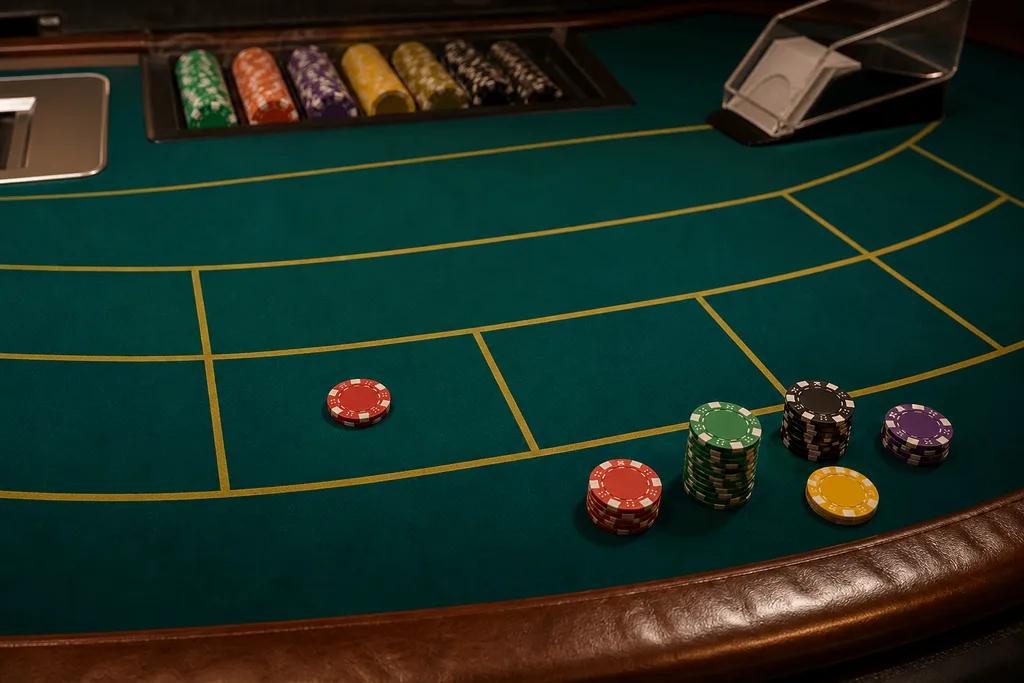
Baccarat Anchoring Bias: How Initial Bets Influence Later Decisions
Anchoring bias means giving too much weight to a starting value or narrow slice of information. The NCBI Bookshelf overview of cognitive biases describes anchoring as reliance on one fact or a small share of available facts, which can block other relevant information.
In baccarat betting psychology, the anchor may be an opening stake, first result, displayed payout, or another player’s wager. Genuine statistical evidence must be relevant, supported by suitable data, and interpreted within the rules. A number is not evidence merely because it is vivid.
How initial bets become reference points
Bet amount as a numerical anchor
Suppose a player chooses $40 for the first wager without much thought. Soon, $10 may feel “too small” only because $40 established the comparison. The initial bet influence has changed the perception of an appropriate stake—not the player’s limits or the game.
The first result as a narrative anchor
An opening win may make a larger second wager feel justified. An opening loss may make the original stake feel like an amount that must be matched. Either way, one result can dominate baccarat decision-making despite being a tiny sample.
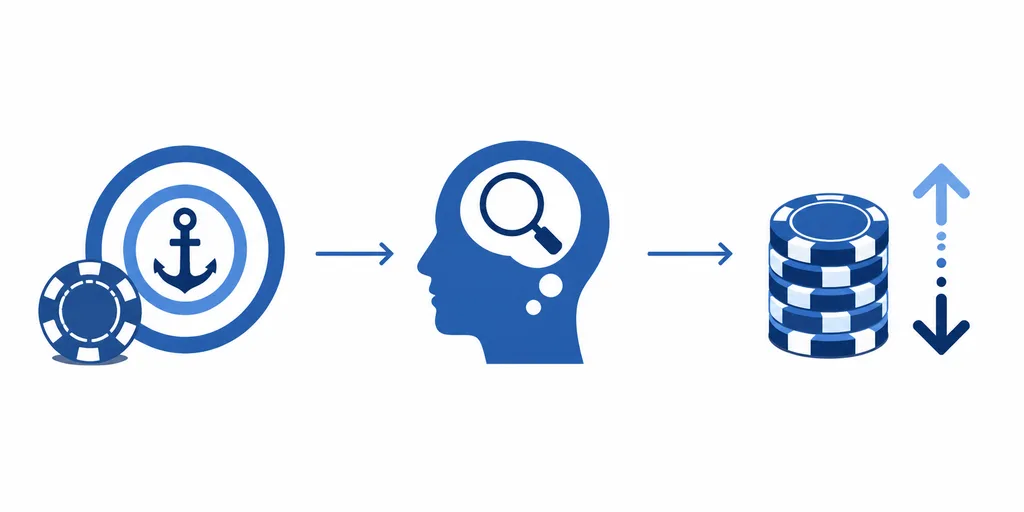
How anchoring changes later choices
After an early win, a player might increase from $20 to $40 because the original amount now feels conservative. After a loss, the same player might keep wagering $40 because stepping down feels like accepting defeat. Neither choice proves anchoring alone. The warning sign is that the first number remains influential after its rationale has vanished.
Related biases are distinct. Confirmation bias favors supportive information. The gambler’s fallacy expects past random results to create a correction. Loss chasing adds risk after losses, while sunk-cost thinking overvalues money already committed. These patterns can overlap with anchoring.
What anchoring bias cannot do
Past hands do not control the next result
A personal win, loss, chosen stake, or visible streak does not cause the next hand to “owe” a Banker, Player, or Tie result. The dealing rules determine probabilities. Recent results may feel informative, but feelings do not change the mechanism of play.
An anchor is not a prediction
An anchor can alter confidence or bet size; it cannot forecast the next hand. Changing stakes changes the amount exposed, not the advantage built into the offered bets. No progression turns past outcomes into predictive evidence or removes the house edge. Treat baccarat as paid entertainment, never as income.
What research can reasonably support
Anchoring is documented as a general feature of judgment under uncertainty, making it a useful lens for cognitive bias in baccarat. Yet research in other settings does not prove every baccarat player behaves identically. Experience, emotion, fatigue, and table conditions can affect choices.
Practical safeguards at the table
- Set the unit in advance. Choose an affordable fixed stake from an entertainment budget, not from the first result.
- Predefine money and time limits. Write them down; do not expand them because play began well or badly.
- Pause before changing size. Wait after a large win, loss, or emotional hand.
- Check several facts. Compare the stake with the budget, session plan, and reason for playing.
- Keep a record. Note the amount, reason, emotion, and whether the choice followed the plan.
A disciplined choice can lose, and an impulsive choice can win. Judge the process separately from one outcome so that outcome does not become false proof.

A five-question self-check
- Would I choose this amount if the first hand had not happened?
- Am I following my written plan or reacting to a vivid number?
- Has my reason changed, or only my emotion?
- Would a short break make this choice easier to explain?
- Is the wager affordable even if it loses?
If an answer is unclear, pause or stop. This check does not improve winning chances; it separates an intentional entertainment decision from an automatic reaction.
Frequently asked questions
Can the first bet affect the next hand?
It can influence thinking, but it cannot physically alter the next result.
Is changing bet size after a win always anchoring?
No. It may be preplanned. Concern arises when an early result overrides the budget or written rules.
Does a losing streak justify a larger wager?
No streak guarantees a reversal. A larger stake increases exposure and may reflect loss chasing, anchoring, or both.
Keep the reference point outside the game
The safest reference point is a limit chosen before emotion and recent results enter the picture. Baccarat Anchoring Bias: How Initial Bets Influence Later Decisions explains why an opening stake can shape judgment, not how to predict cards. Keep gambling optional, use firm money and time limits, and take breaks. If play becomes difficult to control or causes financial or emotional harm, stop and seek qualified responsible-gambling support in your region.