RNG Audit Report Analysis: 카지노 무작위성 보고서 읽는 법
RNG Audit Report Analysis에서 가장 먼저 버려야 할 습관은 첫 페이지의 “Result: Pass”만 보고 판단을 끝내는 것입니다. RNG 감사 보고서는 플레이어에게 유리한 게임을 보장하는 문서가 아니라, 특정 버전의 무작위 생성기와 그 구현이 정해진 기준과 범위 안에서 테스트를 통과했다는 기술 문서입니다. 따라서 좋은 보고서일수록 “무엇을 테스트했는가”, “무엇은 테스트하지 않았는가”, “운영 중인 코드와 보고서의 코드가 같은가”를 구체적으로 보여줍니다.
온라인 카지노, 디지털 바카라, 슬롯, 룰렛처럼 RNG 기반 결과를 쓰는 게임을 검토할 때 이 차이는 중요합니다. 인증은 승리 보장이 아니며, 하우스 엣지를 없애지도 않습니다. 다만 결과 생성 과정이 편향 없이 설계·구현되었는지 확인할 근거를 제공합니다.
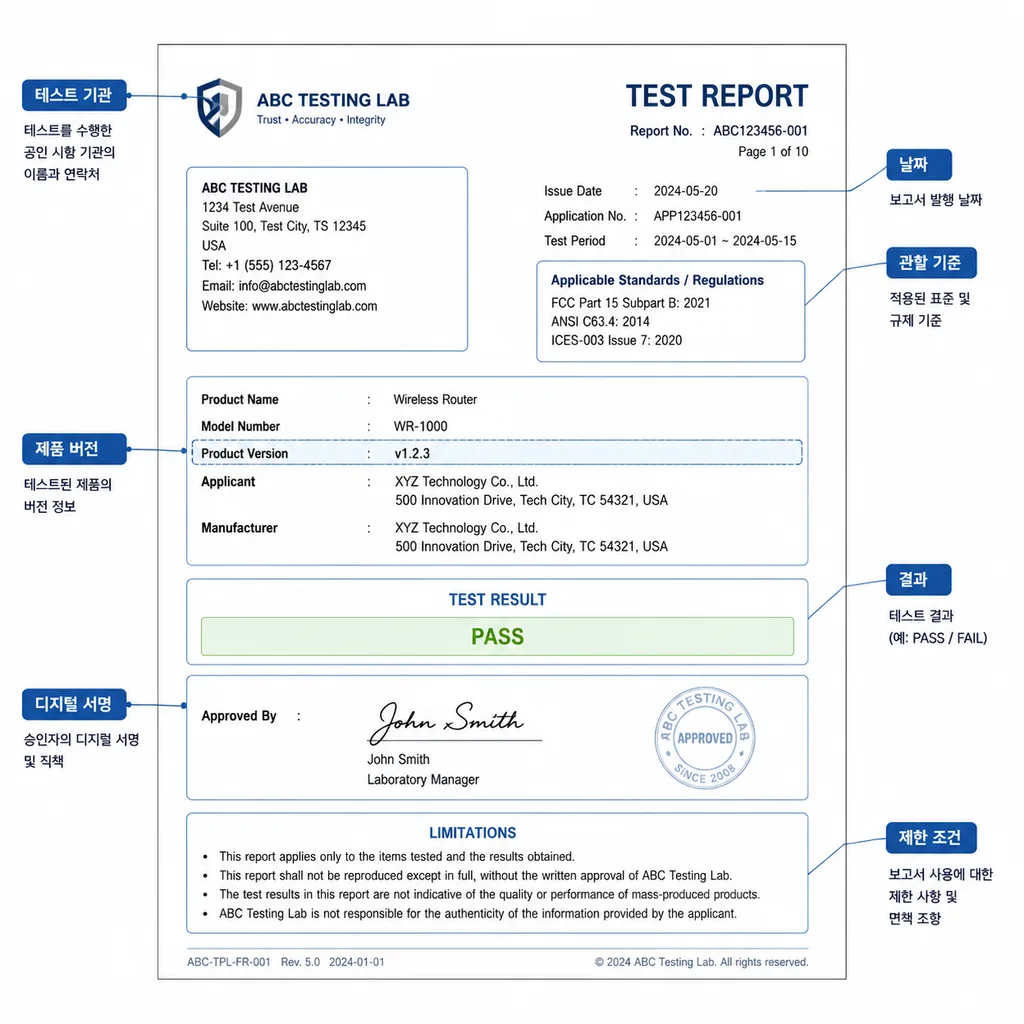
보고서가 실제로 인증하는 것은 결과가 아니라 과정입니다
RNG는 보통 raw output, 즉 기본 숫자 흐름을 만들고 게임 엔진은 이를 카드, 슬롯 릴, 룰렛 포켓 같은 player-facing outcome으로 변환합니다. 예를 들어 바카라에서는 난수가 가상 슈의 카드 순서나 카드 선택 절차에 적용될 수 있고, 슬롯에서는 심볼 위치나 릴 정지 지점으로 매핑됩니다. 이때 보고서가 확인하는 것은 “다음 판에 누가 이기는가”가 아니라, 이러한 생성·변환 과정이 기준에 맞게 작동하는가입니다.
따라서 “Passed”는 항상 문장 뒤에 조건이 붙습니다. 특정 RNG 버전, 특정 소프트웨어 빌드, 특정 플랫폼, 특정 관할 표준, 특정 테스트 범위에서 통과했다는 뜻입니다. RNG 인증 절차 자체가 궁금하다면 how RNG certification works를 먼저 보고, 실제 보고서를 해석할 때는 아래 항목을 하나씩 대조하는 방식이 더 안전합니다.
첫 페이지에서 실험실, 기준, 버전부터 확인해야 합니다
테스트 기관 이름만으로 충분하지 않습니다
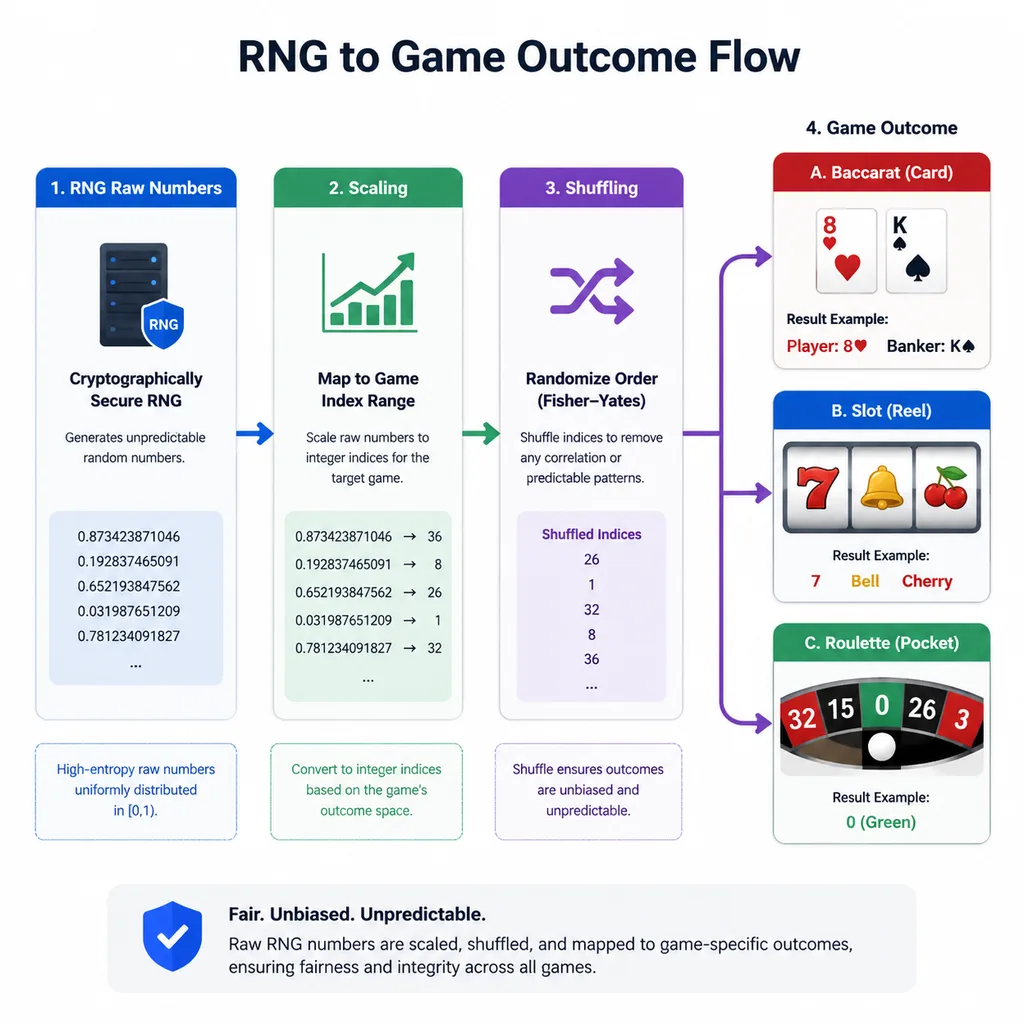
GLI, iTech Labs, eCOGRA 같은 독립 테스트 기관은 RNG 테스트와 인증에서 자주 등장합니다. 그러나 로고나 기관명만 보는 것은 부족합니다. 보고서 발행 주체, 승인자 이름 또는 직책, certificate reference, 연락처, 등록·인정 정보, 발행일을 함께 확인해야 합니다. PDF가 이미지 한 장으로만 제공되고 원본 문서의 식별 번호나 검증 경로가 없다면 투명성이 낮다고 보는 편이 합리적입니다.
관할 기준과 기술 표준은 보고서의 언어를 결정합니다
같은 RNG라도 어떤 기준으로 테스트했는지에 따라 보고서의 의미가 달라집니다. 예를 들어 UK Remote Gambling and Software Technical Standards, GLI-11, GLI-19 등은 적용 대상과 요구사항이 다릅니다. UK Gambling Commission의 testing procedure는 RNG 문서 검토, 알고리즘 또는 하드웨어 취약점 조사, 소스코드 검토, raw output 및 scaled/shuffled data의 통계 테스트, 부적합 사항 재평가를 포함하는 흐름을 설명합니다. 보고서에 표준명이 없으면 “무엇에 대해 통과했는지”가 흐려집니다.
제품 버전과 디지털 지문은 운영 코드와 연결됩니다
RNG version, software number, 플랫폼 버전, key files, checksums, MD5·SHA-1·SHA-256 해시 또는 digital signature는 보고서와 실제 운영 코드가 같은지를 이어 주는 단서입니다. 버전이 바뀌면 기존 보고서는 부분적으로만 유효할 수 있습니다. 특히 원격 게임 서버나 바카라 슈 로직이 업데이트되었는데 보고서 날짜가 그 이전이라면 재검증 범위를 확인해야 합니다.
많은 독자가 건너뛰는 scope가 가장 중요합니다
Scope of testing은 보고서의 심장입니다. 여기에는 RNG만 보았는지, 게임 수학과 RTP도 포함했는지, 플랫폼 통합까지 확인했는지, 소스코드와 실행 파일을 함께 비교했는지 등이 적힙니다. “RNG report”라는 제목이 전체 카지노 플랫폼의 보안, 자금 지급 능력, 고객 보호, 운영 윤리를 보증하는 것은 아닙니다.
raw output, scaled output, shuffled output은 서로 다릅니다
Raw output은 생성기가 처음 내놓는 숫자입니다. Scaled output은 그 숫자를 0~36 룰렛 포켓, 슬롯 릴 위치, 카드 인덱스처럼 게임 결과 범위로 변환한 값입니다. Shuffled output은 카드 게임에서 난수가 덱 순서나 가상 슈 배열에 적용된 결과입니다. 원시 난수가 좋아도 scaling 방식에 modulo bias가 있거나, 셔플 과정이 특정 카드 위치를 과소·과대 생성하면 실제 게임 결과는 편향될 수 있습니다. 바카라 문맥에서는 shuffle integrity in baccarat가 raw RNG만큼 중요합니다.
통계 테스트는 무엇을 증명하려는가
uniformity는 기대 빈도와의 차이를 봅니다
Uniformity 테스트는 가능한 결과가 기대 빈도에 맞게 고르게 나타나는지 봅니다. 바카라 카드 값, 슬롯 심볼, 룰렛 포켓이 장기 샘플에서 특정 방향으로 쏠리면 공정성 문제가 될 수 있습니다. 단, 짧은 구간에서 플레이어 또는 뱅커가 연속으로 나온다는 사실만으로 uniformity 위반이라고 말할 수는 없습니다. 보고서는 충분한 샘플 크기와 테스트 방법을 제시해야 합니다.
independence는 예측 가능성을 줄이는 핵심입니다
Independence는 이전 결과가 다음 결과를 예측하게 만들지 않는 성질입니다. “방금 뱅커가 세 번 나왔으니 다음은 플레이어”라는 식의 감각은 독립성 검증이 아닙니다. 감사 보고서는 대량 샘플에서 serial correlation, runs test, autocorrelation 등 패턴 신호를 확인했는지 보여줄 수 있습니다. 독립성이 약하면 결과 예측 가능성이나 순서 편향 문제가 생길 수 있습니다.
p-value는 무작위일 확률이 아닙니다
p-value는 “이 RNG가 무작위일 확률”이 아니라, 무작위라는 가정 아래 관측된 편차가 얼마나 이례적인지를 보여주는 통계 신호입니다. NIST SP 800-22는 난수·의사난수 생성기 평가용 통계 테스트를 제공하지만, 통계 테스트가 cryptanalysis를 대체하거나 특정 용도에 대한 절대적 적합성을 보증하지 않는다고 설명합니다. 또한 많은 테스트를 동시에 수행하면 일부 경계값이나 실패가 나올 수 있으므로, 보고서가 이를 어떻게 재검토하고 결론 내렸는지 읽어야 합니다.
출력 테스트만 통과해도 구현 문제는 남을 수 있습니다
좋은 통계 결과가 있다고 해서 구현 리스크가 사라지는 것은 아닙니다. 소스코드에서 seed를 부적절하게 만들거나, scaling 함수가 최종 빌드와 다르거나, 테스트용 도구가 실제 운영 함수와 다른 호출을 쓰면 보고서의 의미가 약해집니다. GLI의 제출 가이드는 최종 production에 가까운 RNG application, 동일한 functions와 scaling methodology, raw output collection tool, final outcome collection tool, key files와 checksums, 소스코드 문서화를 중시합니다. iTech Labs와 eCOGRA 역시 source code evaluation, raw 및 scaled/shuffled output testing, seed generation 검토, 주기적 테스트를 언급합니다.
Seed generation과 entropy도 핵심입니다. 강한 PRNG라도 seed가 반복되거나 예측 가능하면 결과가 노출될 수 있습니다. 다만 공개 보고서만으로 특정 사업자의 seed entropy가 충분하거나 부족하다고 단정해서는 안 됩니다. 필요한 것은 “seed source를 검토했는가”, “환경 의존성이 명시되었는가”, “운영 조건이 제한되어 있는가”를 확인하는 태도입니다.
제한 조건은 작은 글씨가 아니라 적용 범위입니다
“The scope was limited to…” 같은 문구는 반드시 읽어야 합니다. 샘플 RNG 보고서들은 software verification, source code review, data analysis/statistical testing처럼 범위를 나누어 적는 경우가 많습니다. 어떤 보고서는 replacement 또는 without replacement 조건, 특정 degrees of freedom, 운영체제 의존성, 하드웨어 난수원 조건을 제한으로 둡니다. 이 조건을 벗어난 사용은 통과 결과를 그대로 적용하기 어렵습니다.
업데이트도 중요합니다. RNG나 RGS 변경이 여러 게임의 공정성에 영향을 줄 수 있다면 대표 샘플 재테스트, 테스트 하우스 협의, 재인증이 필요할 수 있습니다. 오래된 보고서 자체가 곧 조작의 증거는 아니지만, 이후 버전 변경 이력과 연결되지 않으면 검증 가능성이 떨어집니다.
RNG Audit Report Analysis에서 보이는 위험 신호
- 보고서 발행 기관, 승인자, certificate reference가 불명확합니다.
- 테스트 기준이나 관할 표준이 빠져 있습니다.
- RNG 버전, 소프트웨어 번호, digital signature, checksum이 없습니다.
- scope는 좁은데 마케팅에서는 “fully certified”처럼 과장합니다.
- raw output만 테스트했고 scaled output 또는 shuffled output 검증이 불명확합니다.
- source code review, seed generation, algorithm review 언급이 없습니다.
- “passed”는 있지만 어떤 통계 테스트가 적용됐는지 설명하지 않습니다.
- 보고서 날짜가 오래됐고 이후 소프트웨어 업데이트 이력이 있습니다.
- limitations 또는 “not intended for” 문구가 있는데 홍보 자료에서 생략합니다.
- 원본 PDF나 검증 가능한 링크 없이 캡처 이미지로만 제시됩니다.
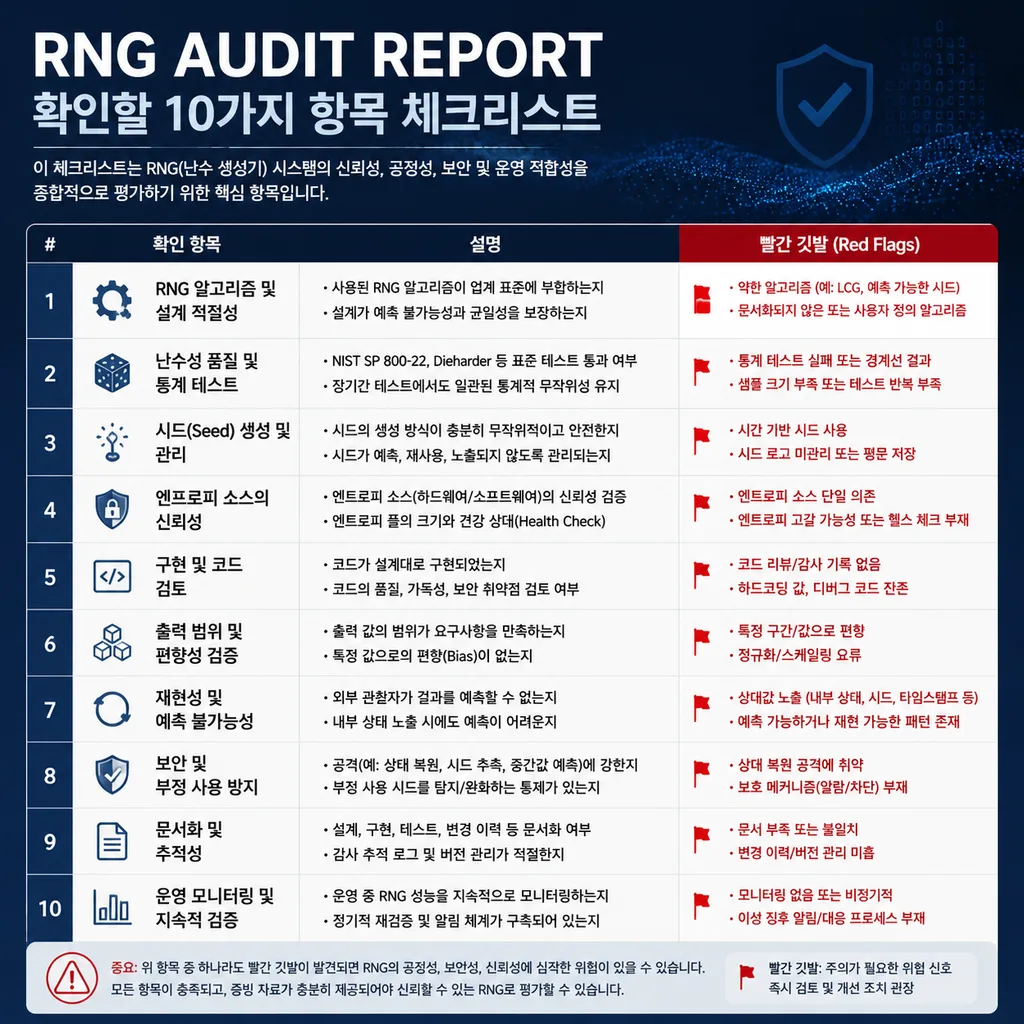
실제 보고서를 옆에 두고 읽는 순서
- 발행 기관, 보고서 날짜, certificate reference를 확인합니다.
- 제품명, RNG 버전, 소프트웨어 번호, 플랫폼 버전을 찾습니다.
- 관할 기준과 기술 표준이 무엇인지 확인합니다.
- scope of testing에서 포함·제외 항목을 표시합니다.
- raw output, scaled output, shuffled output 테스트 여부를 구분합니다.
- source code review와 seed·algorithm 검토가 있었는지 봅니다.
- key files, checksum, digital signature가 있는지 확인합니다.
- limitations, conditions, intended use 문구를 읽습니다.
- 결과가 단순 pass인지, 조건부 pass인지 확인합니다.
- 운영 사이트의 현재 버전이 보고서 버전과 일치하는지 대조합니다.
감사 보고서가 말해 주지 않는 것
RNG audit report는 플레이어가 이길 가능성이 높다는 뜻이 아닙니다. 단기 결과를 예측할 수 있다는 뜻도 아니며, 카지노의 모든 운영 리스크를 제거하지도 않습니다. 인증된 RNG가 있어도 게임의 RTP와 하우스 엣지는 별도의 수학적 구조로 남아 있습니다. 보고서의 가치는 승리 약속이 아니라 특정 범위 안에서 공정성 검증 근거를 제공한다는 데 있습니다.
좋은 RNG 감사 보고서는 구체적이고, 최신이며, 범위가 명확하고, 서명 또는 디지털 지문으로 추적 가능하며, 통계 테스트와 구현 검토가 투명합니다. 반대로 모호한 “인증됨” 문구만 있고 버전·scope·제한 조건이 없다면 그 자체로 조작을 단정할 수는 없지만, 신뢰를 판단할 자료가 부족하다고 보아야 합니다. 결국 RNG Audit Report Analysis의 핵심은 “통과했는가”보다 “무엇이, 어떤 조건에서, 어떤 증거로 통과했는가”를 묻는 데 있습니다.