
Research Note Vol. 26-Q2 · Quantitative Research
The baccarat house edge is the single most important number a player can understand, because it quietly governs every wager placed at the table over the long run.
Baccarat enjoys a reputation as one of the most favourable games on any casino floor, and that reputation is earned. Among the headline bets available in a standard punto banco game, the banker wager carries a house edge of roughly 1.06 percent, the player wager about 1.24 percent, and the tie wager a far steeper figure above 14 percent. These values are not marketing claims. They are derived directly from the fixed drawing rules of the game and the payout schedule the casino applies to each outcome.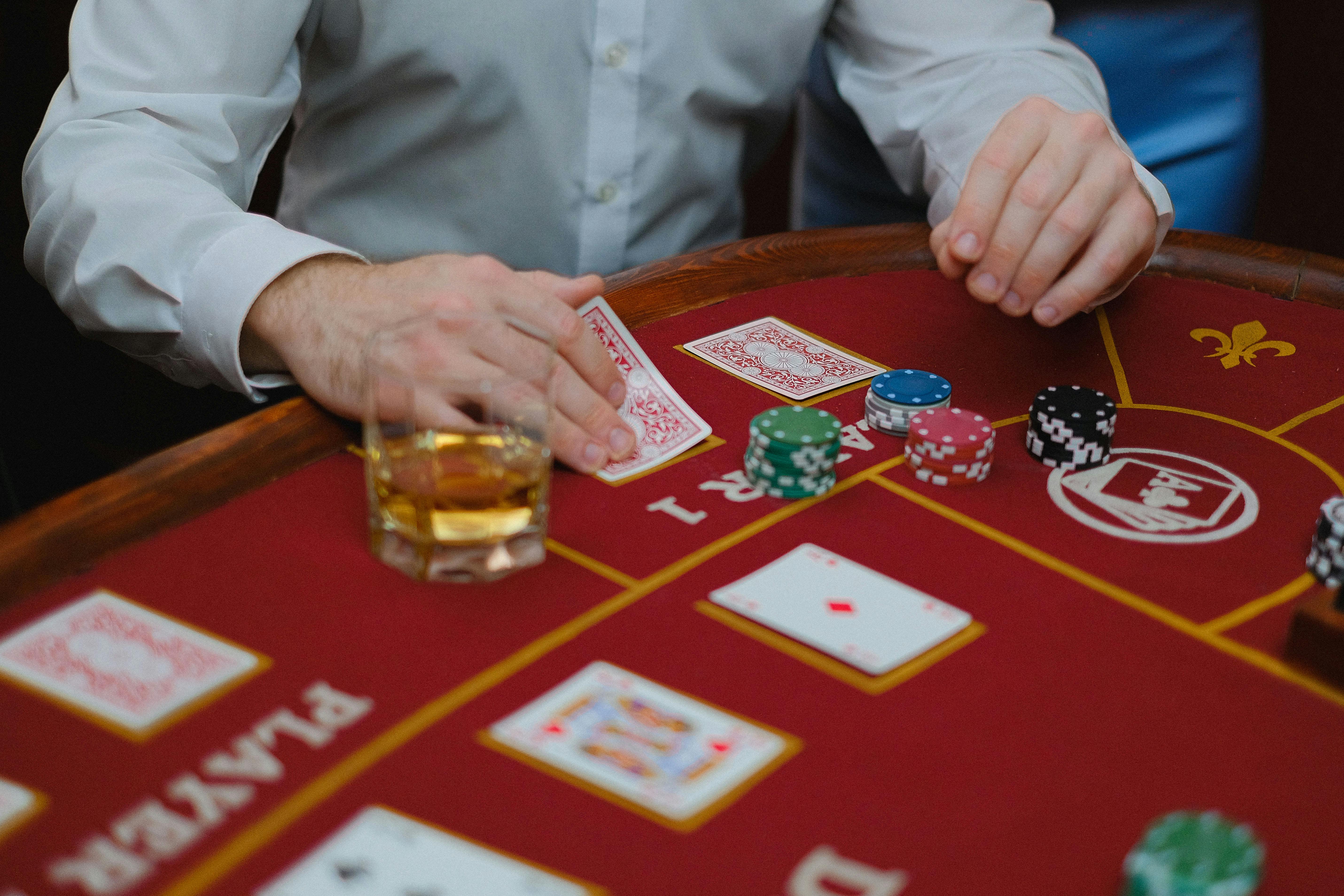
What the house edge actually measures
The house edge is the average percentage of each wager that the casino expects to retain over a very large number of resolved bets. If the banker bet has an edge of 1.06 percent, then for every 100 units staked on the banker across thousands of hands, the casino expects to keep a little more than one unit on average. The figure says nothing about any single hand. A player can win ten coups in a row or lose ten, and the edge still describes only the long-run tendency, not the short-run reality of gambling. This distinction matters because the marketing language around baccarat often blurs it. A low edge does not mean a player is likely to leave ahead. It means the rate at which the bankroll erodes is slower than in higher-edge games such as many slot titles or the double-zero roulette wheel.The three core baccarat bets
The classical reference on the structure of the game describes how the banker, player and tie outcomes are resolved, and the Encyclopaedia Britannica entry on baccarat remains a clean summary of the dealing and drawing conventions that produce these probabilities.The banker bet and the commission
The banker hand wins slightly more often than the player hand because of the asymmetric third-card drawing rules. To neutralise this advantage, the casino charges a commission, usually 5 percent, on winning banker bets. After the commission is applied, the banker remains the lowest-edge wager in standard baccarat at about 1.06 percent. It is, mathematically, the most disciplined bet a player can make.The player bet
The player wager pays even money with no commission and carries an edge of roughly 1.24 percent. The gap between banker and player is small, and a casual gambler will not feel it across a short session, but it compounds steadily across a long one.The tie bet and why it is costly
The tie wager is the trap of the table. Typical payouts of 8 to 1 leave a house edge above 14 percent, which is closer to a keno or slot machine figure than to the rest of the baccarat layout. Side wagers and novelty bets generally share this problem, a structural issue worth studying before staking anything on them.Why the numbers stay fixed
Because the drawing rules and payouts are constant, the edge is not something a strategy system can erode through pattern reading or progressive staking. Scorecards, hot streaks and the familiar grids printed beside every table track history that has no bearing on the next coup. The convergence of observed results toward the theoretical edge is a statistical certainty, and our analysis of Bayesian convergence in baccarat illustrates how quickly simulated outcomes settle around the expected banker and player differential.Comparing baccarat with other casino games
Placed beside its peers, baccarat looks generous. European roulette carries an edge near 2.7 percent, the American double-zero roulette wheel about 5.26 percent, and many online slot machines sit between 3 and 8 percent. The independent gambling analyst Michael Shackleford has published the exact return tables for each baccarat wager, and the Wizard of Odds breakdown of baccarat basics confirms the 1.06, 1.24 and roughly 14 percent figures across six and eight deck shoes.A note on commission-free tables
Commission-free baccarat appears to remove the 5 percent levy, but the casino recovers its margin elsewhere, typically by paying only half on a banker win with a total of six. The net effect usually raises the banker edge above the standard figure, so the headline of a free game rarely improves the player position.Key takeawayThe banker bet is the most efficient wager in baccarat at roughly 1.06 percent, the player bet sits near 1.24 percent, and the tie is best avoided. No comp, bonus or staking system changes these fixed values. Understanding the edge does not guarantee a win, but it lets a player choose the slowest possible erosion of a bankroll and treat the game as paid entertainment rather than an investment.
Sources consulted: Encyclopaedia Britannica, baccarat entry; Wizard of Odds, baccarat return tables. Published for educational analysis of probabilistic decision-making in casino games.