
Regulatory Topology of Global iGaming: A Jurisdictional Comparative Framework
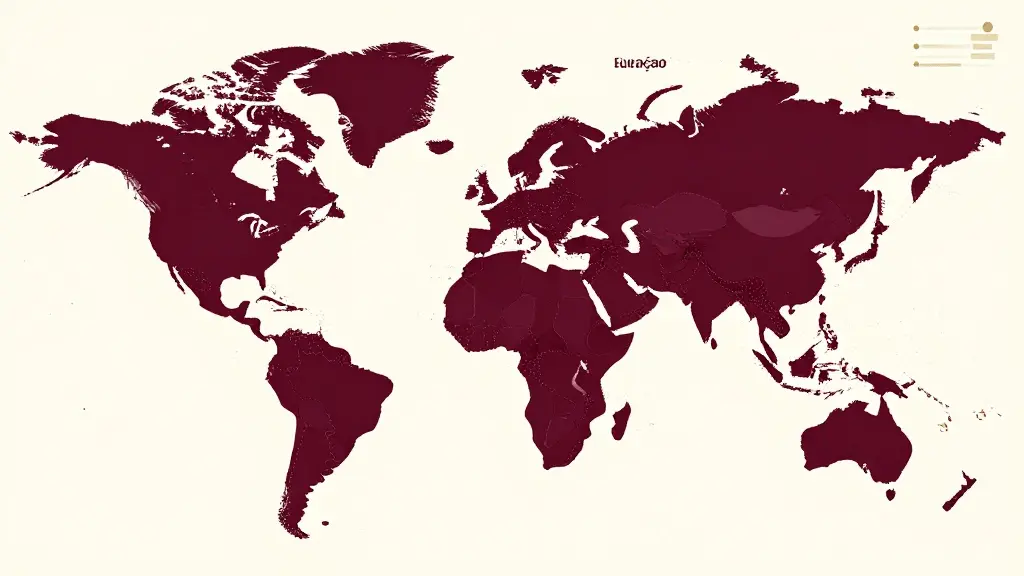
I. The Tier Structure of Global Gaming Jurisdictions
The regulatory topology of global iGaming can be productively analyzed through a tier structure organized along multiple dimensions of regulatory rigor: capital adequacy requirements, anti-money-laundering (AML) and know-your-customer (KYC) standards, technical infrastructure certification protocols, dispute-resolution mechanisms, and the substantive scope of operator obligations toward the player population. No single licensing jurisdiction occupies a clearly dominant position across all dimensions, with the result that any comparative framework must explicitly identify the dimensions along which comparison is being conducted.
The institutional standard for cross-border regulatory analysis draws upon the broader literature of financial regulation, including the comparative frameworks developed by the Bank for International Settlements for evaluating cross-jurisdictional banking supervision. While iGaming regulation operates in a distinct policy domain from banking supervision, the underlying methodological questions — how to compare regulatory regimes across substantive policy differences, how to operationalize concepts such as “rigor” and “effectiveness,” and how to account for the gap between formal regulatory standards and observed enforcement practice — translate directly across the two domains.
The BCRC’s institutional framework for analyzing the regulatory topology of iGaming distinguishes four broad tiers. The top tier comprises jurisdictions with comprehensive regulatory regimes, substantial capital and operational requirements, active supervisory enforcement, and meaningful dispute-resolution mechanisms. The second tier comprises jurisdictions with formal regulatory frameworks but more limited supervisory capacity or enforcement activity. The third tier comprises jurisdictions with primarily administrative licensing rather than substantive regulation. The fourth and lowest tier comprises gray-market jurisdictions in which formal licensing exists but operates primarily as a registration mechanism rather than a regulatory framework.
It is important to note that the placement of any specific jurisdiction within this tier structure reflects an institutional judgment about regulatory effectiveness rather than the formal claims made by the licensing authority itself. Many jurisdictions classified by the BCRC at the third or fourth tier present themselves rhetorically as comparable to top-tier authorities; the empirical record of supervisory action, dispute resolution, and operator compliance is the determinative factor in the BCRC’s analytical framework.
II. Top-Tier Jurisdictions: Malta, Isle of Man, Gibraltar
The canonical top tier of the global iGaming regulatory topology comprises the Malta Gaming Authority (MGA), the Isle of Man Gambling Supervision Commission (GSC), and the Gibraltar Regulatory Authority (GRA). Each of these jurisdictions operates a substantive regulatory regime characterized by meaningful capital requirements, technical infrastructure certification, active supervisory enforcement, and formal dispute-resolution mechanisms accessible to platform users.
The MGA, established under Malta’s Gaming Act, has emerged as the most operationally significant of the European top-tier authorities, owing in substantial measure to Malta’s status as a European Union member state and the consequent applicability of EU consumer protection, AML, and data protection frameworks to MGA-licensed operators. The MGA’s regulatory requirements include substantive financial reporting, mandatory player fund segregation, certified RNG implementation, and active supervisory examination of operator compliance. Platforms operating under MGA license benefit from the credibility associated with a substantive regulatory regime; those operating outside such frameworks do not.
The Isle of Man GSC operates a structurally similar regime, with particular emphasis on financial reporting transparency and substantive operator due-diligence requirements. The Isle of Man’s status as a British Crown Dependency rather than an EU member state produces some structural differences in applicable consumer protection law, but the substantive rigor of the GSC’s regulatory framework remains broadly comparable to that of the MGA.
The Gibraltar GRA presents a somewhat distinct profile within the top-tier regulatory topology, reflecting Gibraltar’s status as a British Overseas Territory and its historical specialization in the licensing of operators serving the United Kingdom market. The post-Brexit regulatory landscape has introduced some operational complications for Gibraltar-licensed operators serving EU markets, but the substantive regulatory rigor of the GRA framework remains within the top tier of the global comparative analysis.
The structural similarities across these three top-tier jurisdictions reflect a broader convergence in international regulatory practice, characterized by what scholars of comparative law have termed “regulatory standardization” in cross-border digital service provision. The Stanford Encyclopedia of Philosophy entry on legal rights provides useful theoretical background on the philosophical foundations of such cross-jurisdictional regulatory frameworks.
III. Mid-Tier and Offshore Jurisdictions
The second and third tiers of the regulatory topology are occupied by a substantially larger and more heterogeneous set of jurisdictions, of which Curaçao is the most operationally significant. The Curaçao licensing structure — historically administered through master licenses issued under the authority of the Curaçao eGaming framework, and more recently subject to substantive reform under the Curaçao Gaming Authority — has been the licensing jurisdiction of choice for the substantial majority of operators serving markets in which top-tier licensing is operationally unavailable.
The substantive differences between Curaçao and top-tier jurisdictions are significant. Capital requirements, technical certification protocols, supervisory enforcement frequency, and dispute-resolution mechanisms operate at substantially lower levels of rigor than those characterizing the top tier. The implication for the regulatory topology is not that Curaçao-licensed operators are uniformly substandard — many operate to high voluntary standards — but that the licensing itself provides substantially weaker institutional assurance to the platform user than top-tier licensing.
Other notable mid-tier and offshore jurisdictions include Anjouan, Costa Rica, Kahnawake (a First Nations jurisdiction within Canada operating under negotiated regulatory autonomy), and the Alderney Gambling Control Commission. Each operates a substantively distinct regulatory framework with different strengths and limitations. According to the comparative analysis provided by Investopedia’s treatment of regulatory arbitrage, the strategic selection of licensing jurisdiction by operators reflects an explicit cost-benefit calculation in which lower regulatory burden is weighed against the reputational and market-access disadvantages of operating outside top-tier frameworks.
The BCRC’s institutional framework treats the mid-tier and offshore regulatory topology as fundamentally a transitional space within the broader market: jurisdictions occupied primarily by operators positioning for eventual upgrade to top-tier licensing, by operators serving markets in which top-tier licensing is unavailable for structural reasons, and by operators for whom regulatory minimalism is a deliberate strategic choice. Each of these populations presents distinct operational and analytical profiles.
IV. The Asian Regulatory Topology and Emerging Markets
The Asian regulatory topology of iGaming differs structurally from the European and Anglo-Atlantic comparative framework, reflecting the substantial heterogeneity of Asian regulatory cultures and the historical legacy of substantively different approaches to gaming regulation across the region. The framework is best characterized as a regulatory patchwork rather than a unified comparative topology, with major jurisdictions occupying substantively different positions along multiple dimensions of regulatory variance.
The Philippine Amusement and Gaming Corporation (PAGCOR) operates the most institutionally developed Asian regulatory framework, with licensing structures distinguishing between domestic-facing and offshore-facing operations under substantively different regulatory regimes. The Philippines’ historical role as a regional licensing hub for operators serving regional markets without their own domestic licensing frameworks has produced a substantial Philippine-licensed operator population, particularly in the years preceding recent regulatory reforms.
Macau operates a distinct regulatory framework focused on land-based and integrated-resort gaming, with online operations occupying a more constrained regulatory position. Singapore’s regulatory framework is structurally restrictive, treating online gambling as primarily prohibited with limited specific exceptions. The Japanese regulatory framework has historically prohibited most forms of online gambling, with the Integrated Resort Implementation Act of 2018 introducing structural reform whose full operational implications remain in development as of the present analysis.
The Korean regulatory framework occupies a particularly distinctive position within the Asian regulatory topology, characterized by domestic prohibition coupled with active enforcement against offshore operators serving Korean residents. The structural implications for any analysis involving Korean market participation are substantial and bear directly upon the institutional assessment of operational risk. Practitioners are directed to the BCRC’s companion monograph on behavioral discipline in high-variance environments for the cognitive frameworks relevant to navigating such regulatory uncertainty.
V. Conclusion
The findings documented in this monograph establish that the regulatory topology of global iGaming is best understood as a multi-tier comparative spectrum rather than a binary legal-versus-illegal distinction. The substantive differences across the tiers — in capital requirements, supervisory enforcement, technical certification, and dispute-resolution mechanisms — produce substantial operational variance across the jurisdictions, and the institutional implications for any specific analytical or operational deployment are correspondingly substantial.
The four-tier framework documented here — top-tier substantive regulation (Malta, Isle of Man, Gibraltar), mid-tier formal regulation (Curaçao, Alderney, Kahnawake), administrative licensing (Anjouan, Costa Rica), and the Asian regulatory patchwork — provides a structured basis for institutional comparative analysis. The placement of any specific jurisdiction within this regulatory topology reflects empirical assessment of supervisory effectiveness rather than formal regulatory claims, and is subject to ongoing revision as jurisdictional practice evolves.
This monograph completes the BCRC’s foundational integrated framework for institutional iGaming research. The quantitative framework establishes the mathematical structure within which strategic decisions occur. The algorithmic integrity framework establishes whether that mathematical structure governs the operational platform. The behavioral framework establishes whether practitioners can reliably translate intellectual understanding into operational discipline. And the regulatory topology framework documented here establishes whether such practice is permissible within the practitioner’s jurisdiction at all. Each represents a necessary component of an integrated institutional approach, and serious practitioners are encouraged to engage with the full sequence of monographs as an interconnected body of empirical research.
Future BCRC monographs in the Market Analysis track will examine the evolving regulatory topology in greater depth, including emerging frameworks in jurisdictions not addressed in the present overview and the substantive implications of ongoing regulatory reform processes in established jurisdictions. The regulatory topology of global iGaming is, like the broader regulatory landscape of digital service provision, in a state of continuous evolution, and institutional analysis must keep pace with that evolution to remain operationally relevant.
Related Research
- Bayesian Convergence in Baccarat: Empirical Game Theory Models — BCRC Vol. 26-Q1, Quantitative Research
- Seed Entropy and the Integrity of Random Number Generation in Digital Gaming — BCRC Vol. 26-A1, Algorithmic Audits
- Loss Aversion and the Anchoring Effect in High-Variance Decision Making — BCRC Vol. 26-B1, Behavioral Studies
BCRC Research Monograph Vol. 26-M1 · Market Analysis · ISSN: 2024-BCRC