
A player is down eight units, pauses at the edge of the baccarat table, and then makes a larger Banker bet because leaving now would make the loss feel final. That moment captures the Baccarat Sunk Cost Fallacy: a past loss begins to influence a new decision, even though the next coup has not become more favorable.
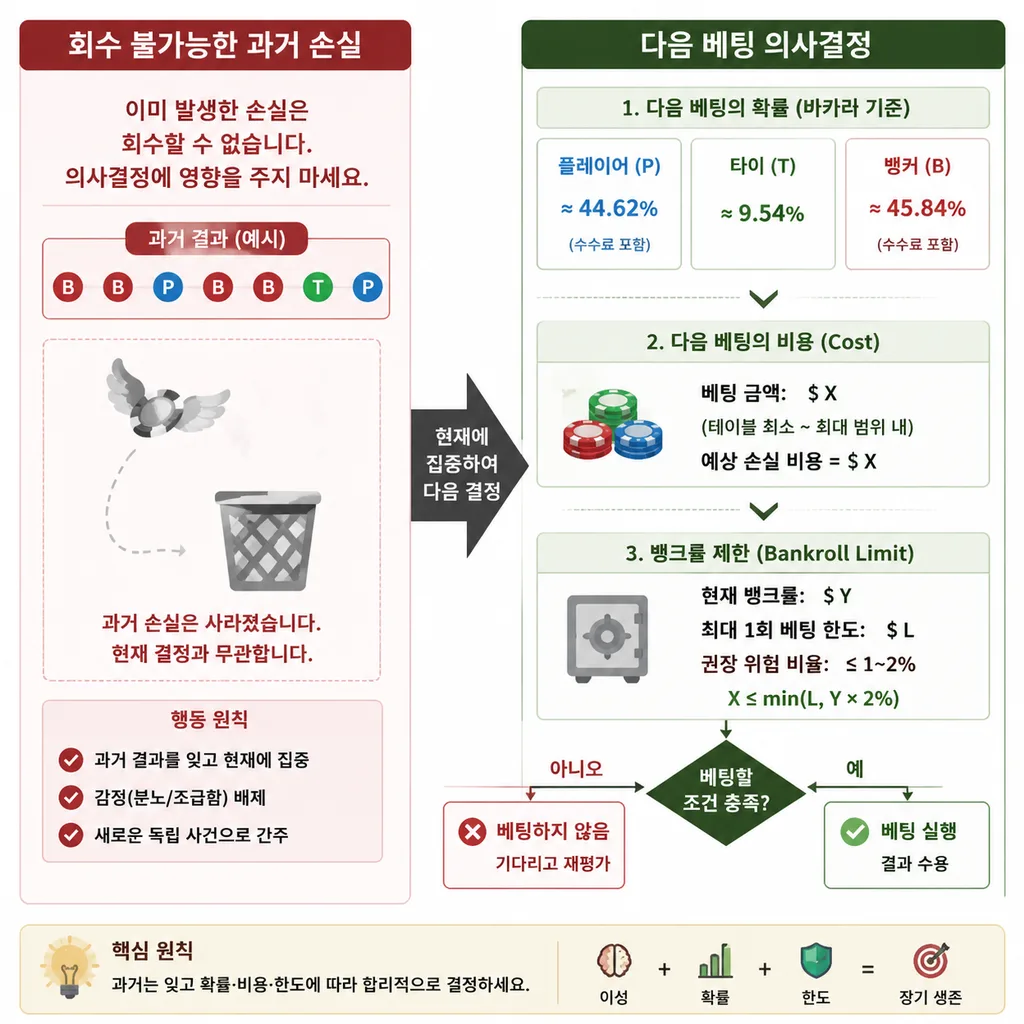
The essential principle is simple: money already lost in a session has no predictive value for the next baccarat decision. It may feel emotionally important, but it does not change the payout structure, your bankroll limits, or the casino’s mathematical edge.
What Is the Sunk Cost Fallacy in Baccarat?
The sunk cost fallacy is the tendency to continue an action because money, time, or effort has already been spent. In baccarat, it appears when a player thinks, “I have already lost too much to stop,” or “I need one more hand to make this session worthwhile.”
A sunk cost is unrecoverable by definition. The question is not whether the previous bets were painful, disappointing, or frustrating. The rational question is: from this point forward, is the next bet consistent with my odds, bankroll rules, and entertainment budget?
Classic behavioral research by Hal Arkes and Catherine Blumer described the sunk cost effect as a greater tendency to continue an endeavor once an investment has been made. Baccarat gives this bias a clear stage because decisions arrive quickly, losses are visible, and the next hand always feels close enough to repair the previous one.
A Simple Baccarat Example
Imagine a player begins with a 100-unit session bankroll and plans to bet 5 units per hand. After a difficult shoe, the player is down 40 units. A fresh 20-unit bet would normally feel too large, but now it is justified as a “recovery” bet.
This is the critical mistake. The 40 units are already gone. A 20-unit bet should be evaluated as if the session were starting now: does it fit the player’s rules, risk tolerance, and reason for playing? If the answer is no, then the bet is being driven by sunk cost pressure rather than by a stable decision rule.
Sunk Cost Fallacy vs. Loss Chasing
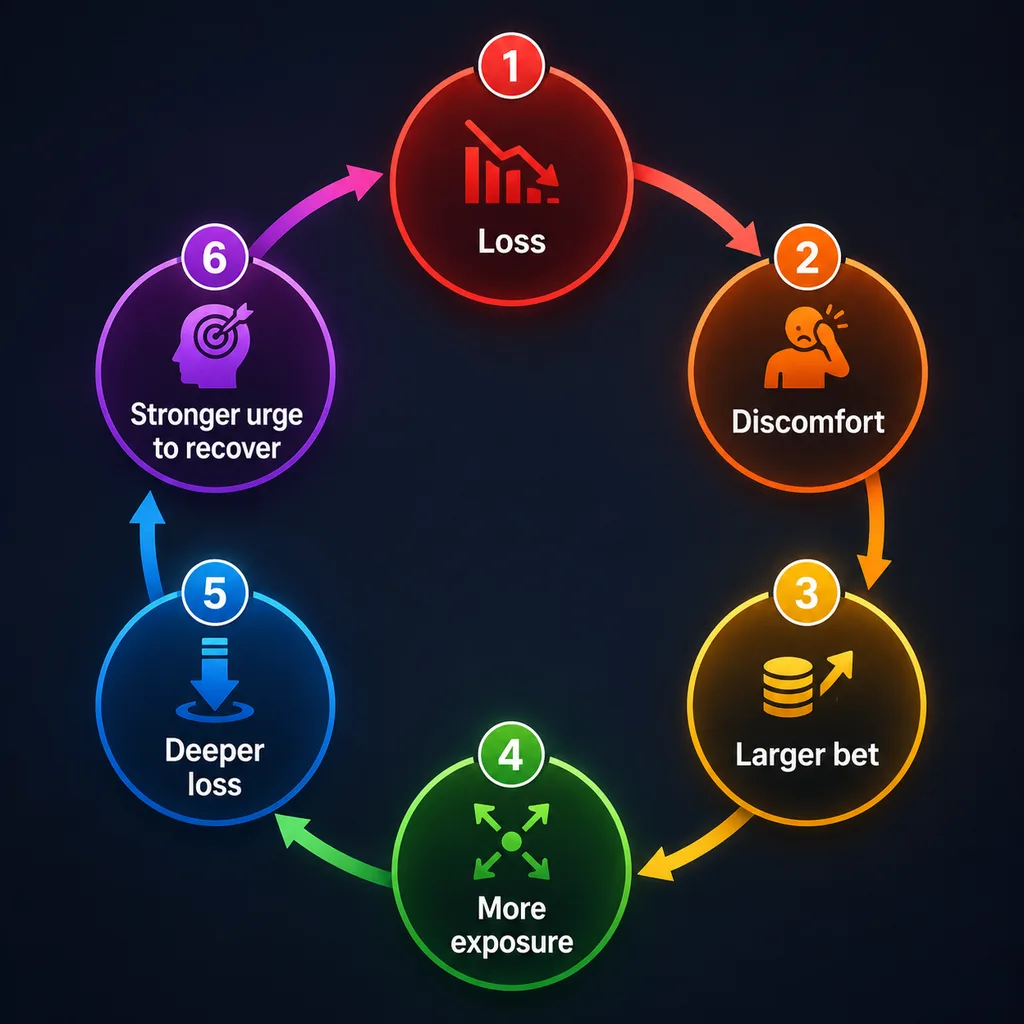
Loss chasing is the behavior of continuing to gamble in an attempt to recoup losses. The sunk cost fallacy is one possible mental justification for that behavior. In other words, chasing is what the player does; sunk cost thinking is one reason the player may feel that chasing is reasonable.
Research on gambling behavior often distinguishes chasing within the same session from chasing across later sessions. Baccarat’s pace makes within-session chasing especially easy to miss. “One more hand” becomes another hand, then a larger hand, then a new reason not to leave.
Sunk Cost Fallacy vs. Gambler’s Fallacy
The gambler’s fallacy is different. It is the belief that a future result is “due” because of previous outcomes, such as expecting Player to hit because Banker has appeared several times in a row. The sunk cost fallacy is not mainly about predicting the next result; it is about feeling obligated to continue because of what has already been lost.
At the table, the two biases can combine: “I lost five Player bets, Banker must be due, and I need to get even.” For a deeper explanation of streak-based reasoning, see this guide to gambler’s fallacy in baccarat.
Why Baccarat Makes the Bias Feel Plausible
Baccarat is often described as a relatively low-house-edge casino game, especially compared with many side bets. According to Wizard of Odds baccarat data, the standard Banker bet has a house edge of about 1.06%, Player about 1.24%, and Tie is far higher, commonly above 14% depending on rules.
That low edge can make recovery feel more plausible than it really is. A small house edge does not become a positive expectation because the player is behind. It also does not justify progression betting, doubling after losses, or using the Tie bet as a desperate shortcut.
Scoreboards, bead roads, and big roads add narrative pressure. They can make prior outcomes feel like a map, even when they mostly record what has already happened. In a finite shoe, card composition does change slightly as cards are removed, so baccarat is not identical to flipping a coin. But for ordinary table decisions, a losing session does not create a personal right to recovery or make emotional escalation mathematically sound. For probability-focused readers, baccarat house edge and long-run convergence are better guides than the feeling that a shoe “owes” a result.
The Psychology Behind Getting Even
Sunk cost pressure is powerful because quitting can feel like wasting the earlier bets. The player may not be only trying to win money back; they may be trying to change the emotional meaning of the session. A break-even point becomes a psychological finish line.
This connects with loss aversion: losses tend to feel more intense than equivalent gains. Once the session is anchored at “I was even earlier,” every later decision may be judged against that lost reference point. That is why loss aversion and anchoring in high-variance decisions are often discussed together with sunk cost behavior.
Recent gambling studies have also examined how craving, present-focused thinking, and interpretive biases may be associated with chasing behavior. This does not mean every frustrated baccarat player has a disorder. It means that fast, emotional decisions can become less about the next hand and more about escaping the discomfort of being behind.
A Practical Decision Rule for Baccarat Players
Ask the fresh-start question
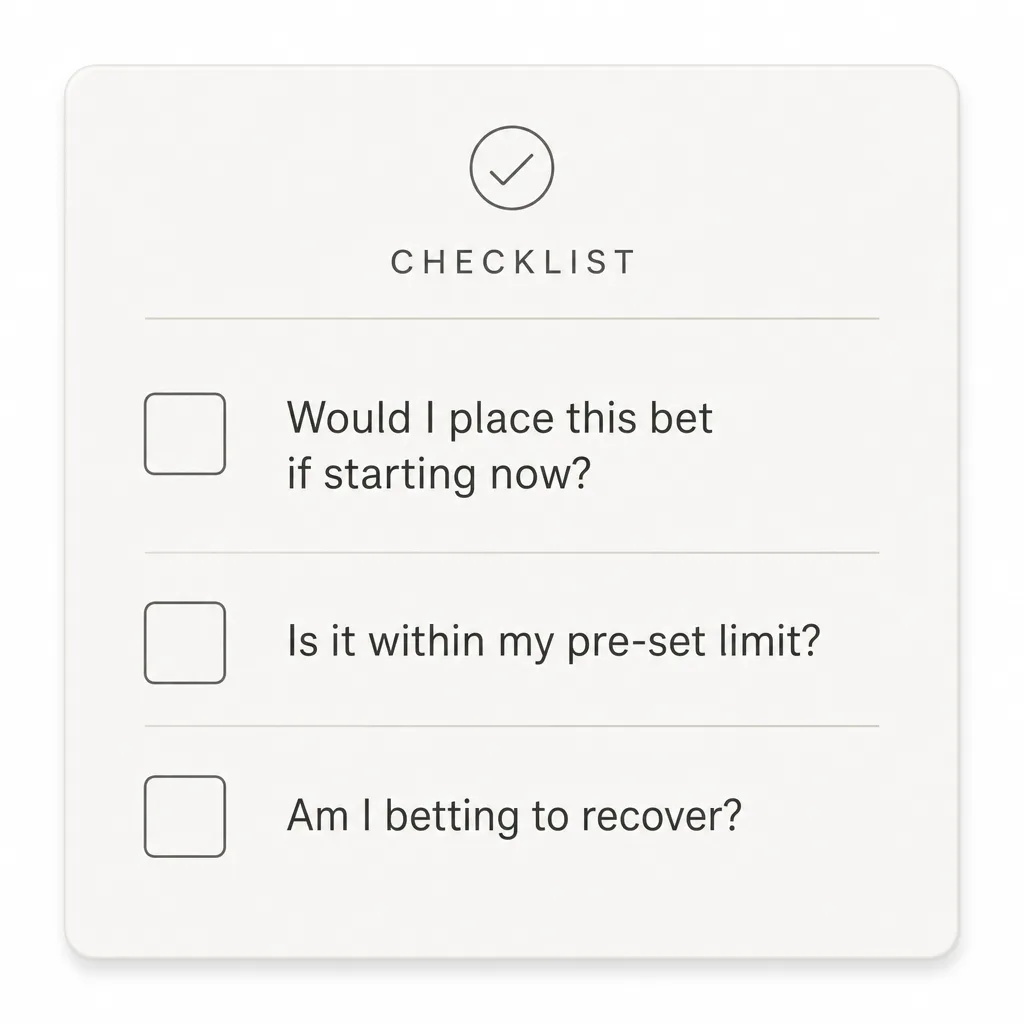
Before placing a recovery-motivated bet, ask: “If I had not lost anything yet, would I place this exact bet now?” If the honest answer is no, the previous loss is probably driving the decision.
Pre-commit before the first hand
Limits work best before emotion rises. Set a stop-loss, time limit, bet-size cap, and a rule against increasing bets solely after losses. These are not winning systems; they are boundary tools. A structured approach to bankroll management in baccarat helps separate entertainment risk from impulsive escalation.
Separate analysis from recovery
A bet should have a clear reason that exists independently of past pain: fixed stake size, pre-set budget, game rules, or simple entertainment choice. “Because I need to get back to even” is not an analysis. It is a warning signal.
Warning Signs at the Table
- “I have already lost too much to stop.”
- “One win will reset the whole session.”
- “I will leave when I get back to even.”
- “This shoe owes me something.”
- “I would never bet this much at the start, but now I have to.”
The Takeaway
The sunk cost fallacy in baccarat occurs when past losses take control of present decisions. Those losses may feel urgent, but they do not improve the next coup, reduce the house edge, or make a larger bet more rational.
The safest response is not a more aggressive betting pattern. It is a pre-committed boundary, a fresh-start question, and the willingness to stop while the decision is still yours. If gambling no longer feels voluntary, or if you keep playing mainly to recover losses, consider contacting a trusted support service such as the National Problem Gambling Helpline.